Advisory & Roadmapping
  Move Management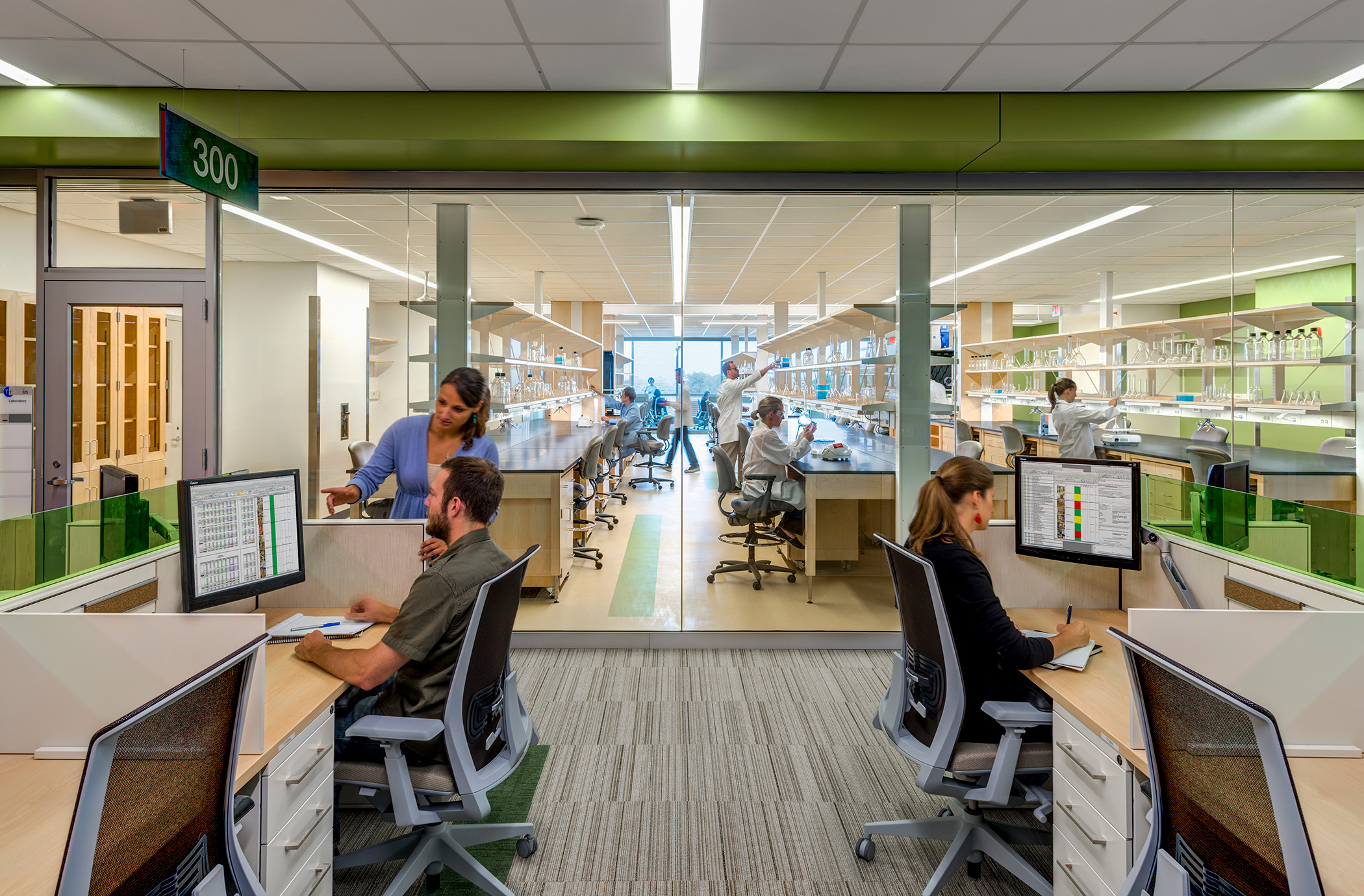
Challenge
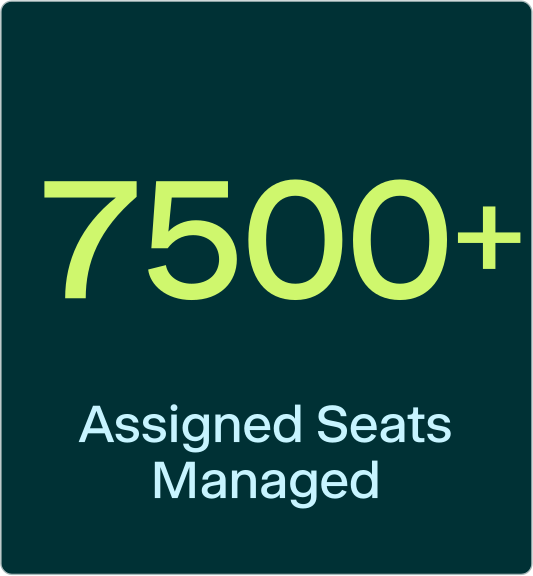
With more than 7,650 assigned seats across its research enterprise, one of the country’s leading pediatric healthcare systems needed to ensure accurate seat assignments as they integrated Workday Human Capital Management into their existing Archibus Space Management system. Before adopting Workday, their previous employee management system had operated independently of Archibus, which resulted in employee locations that often didn’t match across platforms.
Those discrepancies created real operational challenges. HR teams struggled to track reporting structures. Finance risked tax reporting errors when employee locations were outdated or incorrect. Emergency Response teams lacked reliable visibility into who was located where. And Facilities and IT spent significant time manually validating seating assignments, particularly during moves or onboarding.
As their space evolved, with offices becoming conference rooms, departments continually reshuffling, etc., keeping up became increasingly difficult. The organization needed one authoritative source of truth to confidently manage people and the spaces they occupy.
Approach
Partnering closely with the client, we helped design a unified seat management workflow that ties facility data to organizational structure. This ensures every seat assignment reflects real people, real places, and accuracy around who reports to whom.
Our work included:
Bi-directional integration:
• New hires and personnel changes now feed automatically into Archibus.
• Space changes, additions, and move data flow back to Workday daily.
Reconciliation tools to identify and correct mismatches before they create issues.
Refined workflows and job task descriptions to ensure moves are initiated and completed properly.
Standardized research-related data directly in Archibus, eliminating redundant interfaces.
Governance strategies that prioritize people.
While the organization transitioned to Workday, we ensured the technology spoke the language of space: who sits where, why they sit there, and how that information supports operations from day one. Our platform-agnostic approach ensured sustainability, regardless of future system upgrades.
Impact
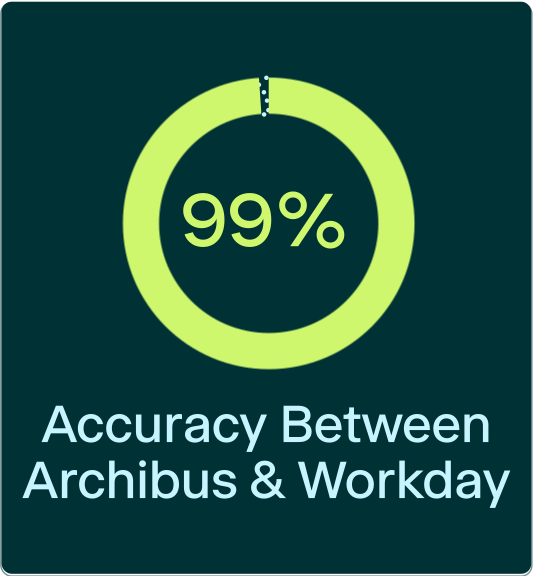
The integration has virtually eliminated mismatches between HR and space systems, shifting the organization from reactive fixes to proactive accuracy. Today, staff across HR, Facilities, and Operations have complete confidence in where employees sit and how they are connected across teams.
Key benefits include:
Day-one readiness for new hires
Seat assignments, supervisory relationships, and workplace resources are fully in place before new employees arrive
Reduced manual effort
Significantly fewer corrections and cross-departmental reconciliations
Improved tax reporting accuracy
Employee locations now reliably match operational reality
Stronger safety visibility
Integration with clinical systems provides a trusted audit of personnel location in emergencies
Better logistics and mail delivery
Space data now keeps pace with organizational change
Greater space accountability
Leadership can see where fixed seats exist and ensure they’re properly utilized
By maintaining a master record in one place and continuously feeding updates across platforms, the client has created a scalable framework for accurate people-to-place alignment. As their research programs expand, their digital workplace will flex right alongside them.