Advisory & Roadmapping
  Move Management
Challenge
A nationally ranked research hospital that manages hundreds of daily employee and equipment moves was struggling with a process that had become cumbersome. Inconsistent data entry, unclear field definitions, redundant workflows, and limited accountability were causing delays and confusion between departments. Extended idle periods impacted both operational efficiency and staff productivity.
Approach
As workflow experts, Atmys performed a comprehensive evaluation of their existing move process, from request initiation through completion. Our team reviewed process maps and workflow documentation, then conducted on-site observations at two facilities, shadowing end-users as they navigated the move process. We captured screen activity and live interactions between staff. We conducted targeted internal team interviews (information systems, telecom, design construction team management, research space management, and a third party furniture vendor) to understand pain points, workflow bottlenecks, and systems used in practice.
The evaluation uncovered widespread misunderstandings of key form fields—from date definitions to equipment details—which often led to inconsistent or incomplete data. To address this, we recommended refining terminology, adding contextual tool tips, and reorganizing field layouts for greater usability. We also identified the need to separate workflows for single-person and multi-person moves, streamlining simple requests while ensuring complex projects captured all necessary details.
Beyond immediate fixes, our recommendations provided a forward-looking roadmap: better leveraging of Archibus Workplace and Project Management modules to automate requests, enhance collaboration, and integrate additional service providers. This approach not only addresses current inefficiencies but also positions the client to scale its move processes as the organization grows.
Impact
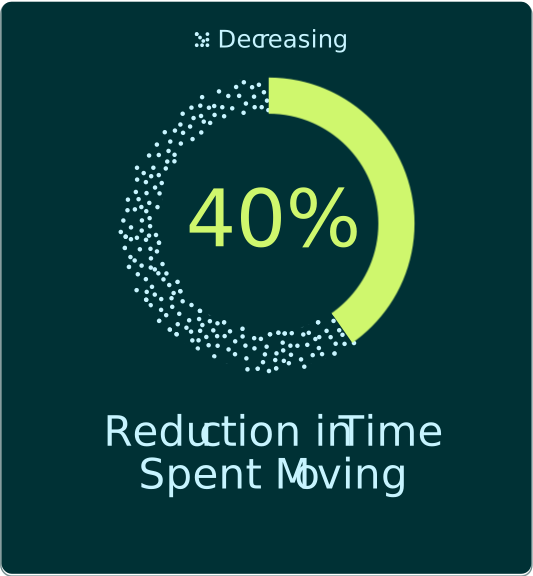
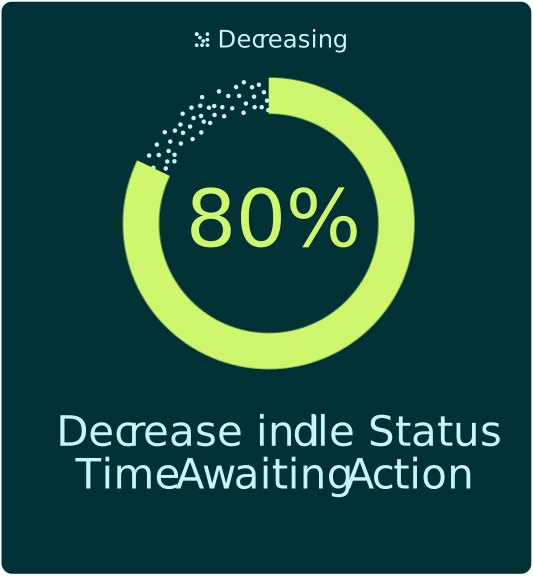
Following implementation of our recommendations, the time their staff spent completing moves decreased by 40% and idle status time awaiting action dropped by over 80%. Operational administrators and facility managers now navigate the system with greater clarity, data accuracy has improved, and redundant manual steps have been reduced. The process changes have strengthened coordination between real estate, facilities, IS, and vendor teams while laying the groundwork for future system integrations that will sustain and build upon these efficiencies.
Antiquated and incomplete documentation was overhauled into concise, easy to follow instructions, with select topics translated into clear, user-friendly videos for end users to reference.